More than a century on the road to Monte Rosa
Grande Halte began as a little inn on the mule track from Alagna up to the Col d'Olen and the Capanna Margherita. Since 1946 it has been the Rifugio Città di Mortara of the Italian Alpine Club. This is its story, as far as the documents and the house's own memory tell it.
From the 1200s
The Walser and Alpe Seewji
In the last decades of the thirteenth century Walser settlers came over from the Valais and made their home at the head of the Valsesia. Alagna grew out of them: a village of hamlets, of houses in wood and stone, with a language of its own, Titzschu.
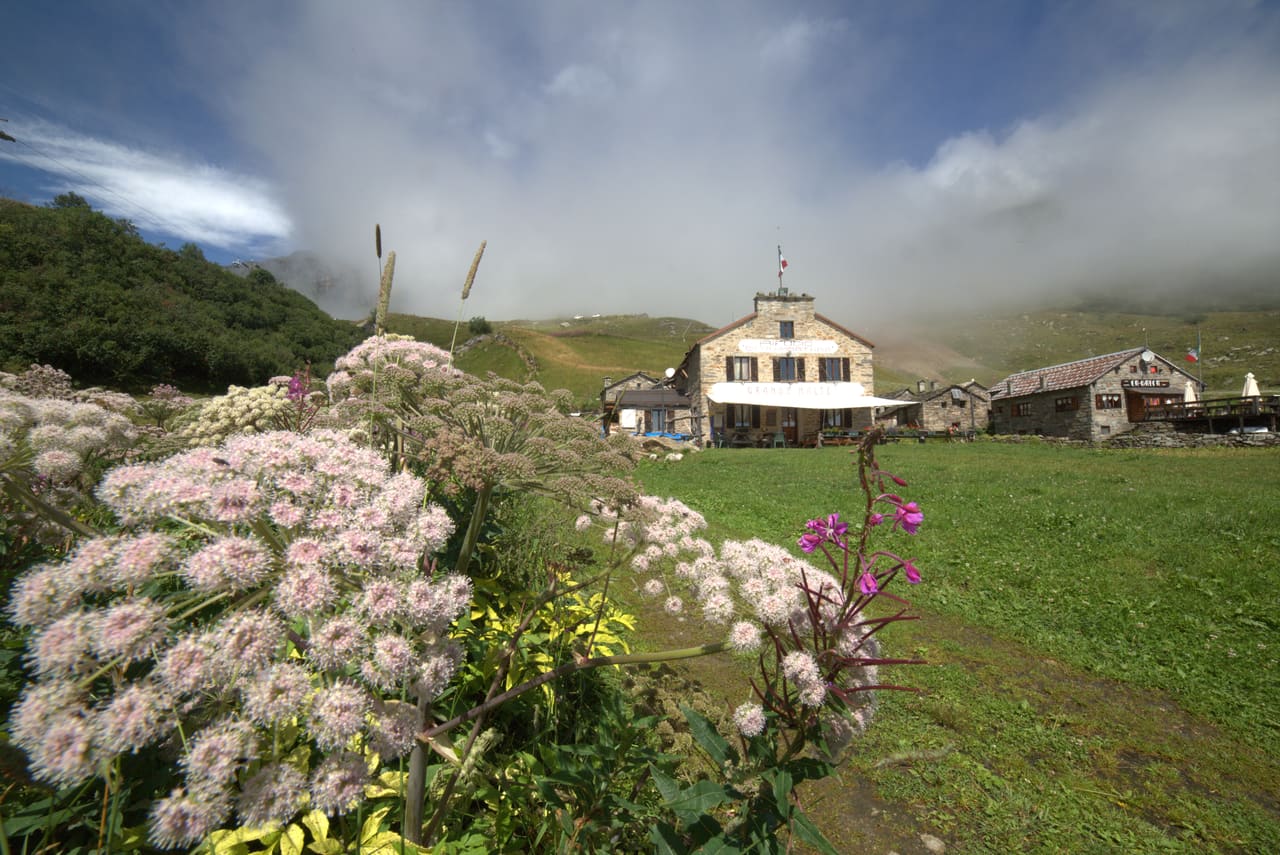
In summer the Walser drove their animals up to the high pastures. The Olen valley is one of Alagna's great summer grazings, and Alpe Seewji is one of its stages: an open meadow at almost two thousand metres, under the ridges that lead to the pass. The name is spelt many ways, Seewji, Seiwji, Seevy, as happens to Walser names handed down by word of mouth.
1872 – 1907
The road to Monte Rosa
The Col d'Olen, at 2,881 m, was the Walser pass to Gressoney. In the nineteenth century it becomes Alagna's gateway to Monte Rosa: in 1872 the Alagna mountain guides form their corps, and in 1878 a hotel is built on the pass, later the Rifugio Guglielmina.
In 1893 the Italian Alpine Club opens the Capanna Regina Margherita on the Punta Gnifetti, at 4,554 m, carried up in pieces by mule and on men's backs. The queen herself climbs to it on 18 August. In 1907 the high-altitude physiology institute founded by Angelo Mosso opens beside the pass.
Anyone going up from Alagna to the pass, on foot or with mules, takes the old mule track up the Olen valley, and it passes Alpe Seewji. There, halfway between the village and the pass, Grande Halte is born.
1911
A la Grande Halte
Around the turn of the twentieth century a little inn with a French name opens on Alpe Seewji: A la Grande Halte, the great stop. The house's tradition dates its birth to 1911, the year the hut carries in its logo.
An old advertisement presents it “on the road to Monte Rosa”, at Alpe Seevy, 2,000 m up: a restaurant open at all hours, board and lodging, a spacious dining room, single and double rooms and a view of the Capanna Regina Margherita. From there, an hour and forty minutes to Alagna and two and a half hours to the Colle d'Olen.
In the 1940s the inn belongs to Signor Rimella of Alagna. The advertisement's engraving has come down to us by kind permission of Signora Germana Rimella, and today it is printed on the restaurant's placemats.
The engraving from the old advertisement for the inn “A la Grande Halte”. By kind permission of Signora Germana Rimella. 1946 – 1947
Rifugio Città di Mortara
In 1946 a group of the Italian Alpine Club is founded in Mortara, in the Lomellina plain, as a sub-section of Vigevano; a year later it becomes a section of its own. To celebrate, its first outing is two days at the Col d'Olen with a climb of the Corno del Camoscio: the snow reaches down to an hour from the “Grande Alt”, Signor Rimella's little inn, and that is where the idea of buying it and making it a hut is born.
Vigevano was about to open its own hut at the Col d'Olen and Mortara, the section recalls, did not want to be outdone. In 1947 the plan comes true: the first president, the lawyer Guglielmo Magnaghi, leads the purchase, and members take up shares of 25,000 lire each, which they later waive, so the hut becomes the section's property.
On 22 June 1947 two coaches leave Mortara at dawn and reach Alagna at half past nine; from there everyone climbs on foot, with the village priest and mayor. At noon Monsignor Dughera, parish priest of San Lorenzo in Mortara, says Mass in the open and blesses the hut, by now renamed Rifugio Città di Mortara. The mayor of Mortara, Dr Giovanni Ferrari, is there, with representatives of CAI Novara and of the national club and about a hundred people from Mortara.
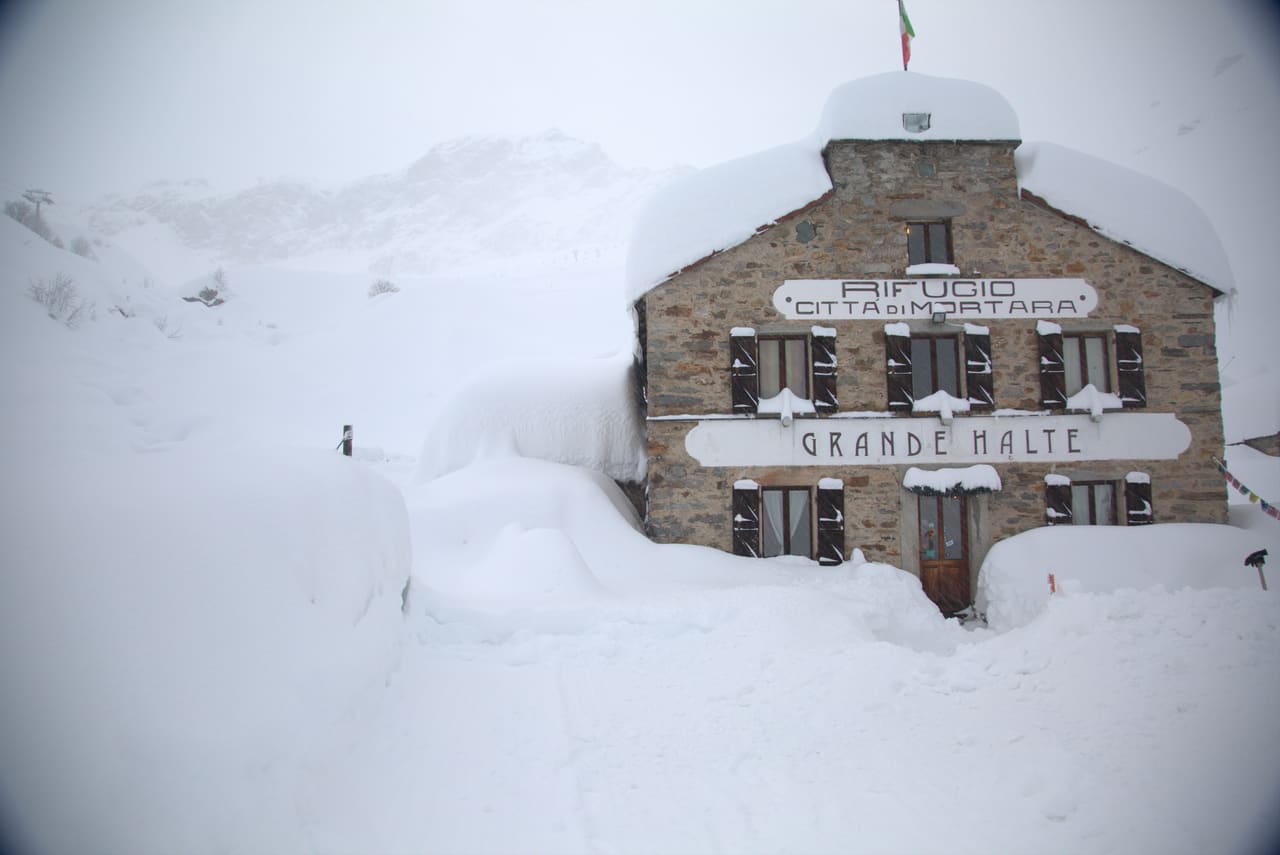
Today the facade carries two painted signs: Grande Halte and Rifugio Città di Mortara.
1965 – 2009
The slopes at the door
In 1965 the cable car takes skiers from Alagna up to Punta Indren, at 3,260 m, but by another way, through Zaroltu and the Bocchetta delle Pisse. The old Colle d'Olen road is left aside for about half a century.
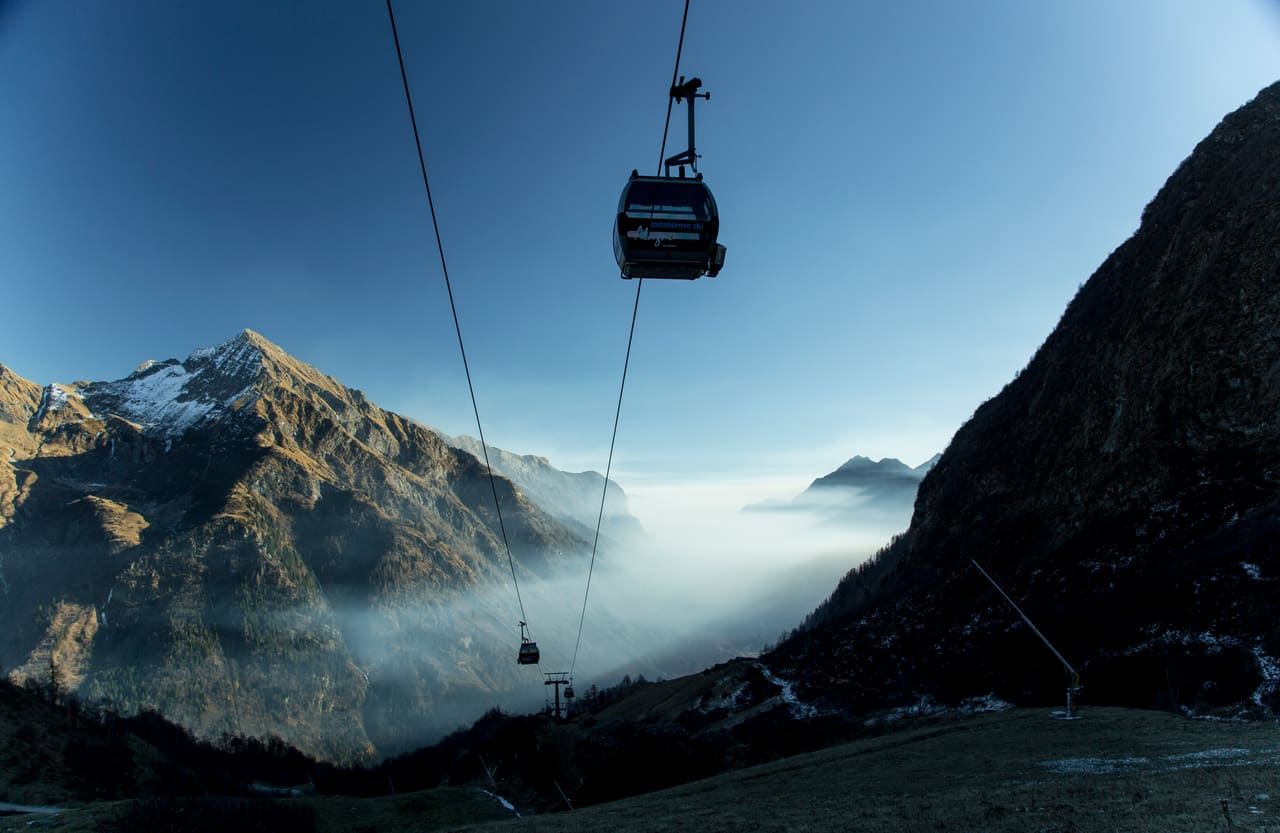
In December 2000 a new gondola brings the lifts back along that road, from Alagna to Pianalunga, about a hundred metres above the hut. In 2004 the Funifor climbs from Pianalunga to the Passo dei Salati and ties Alagna into Monterosa Ski; in 2009 a new cable car runs from the Salati to Punta Indren.
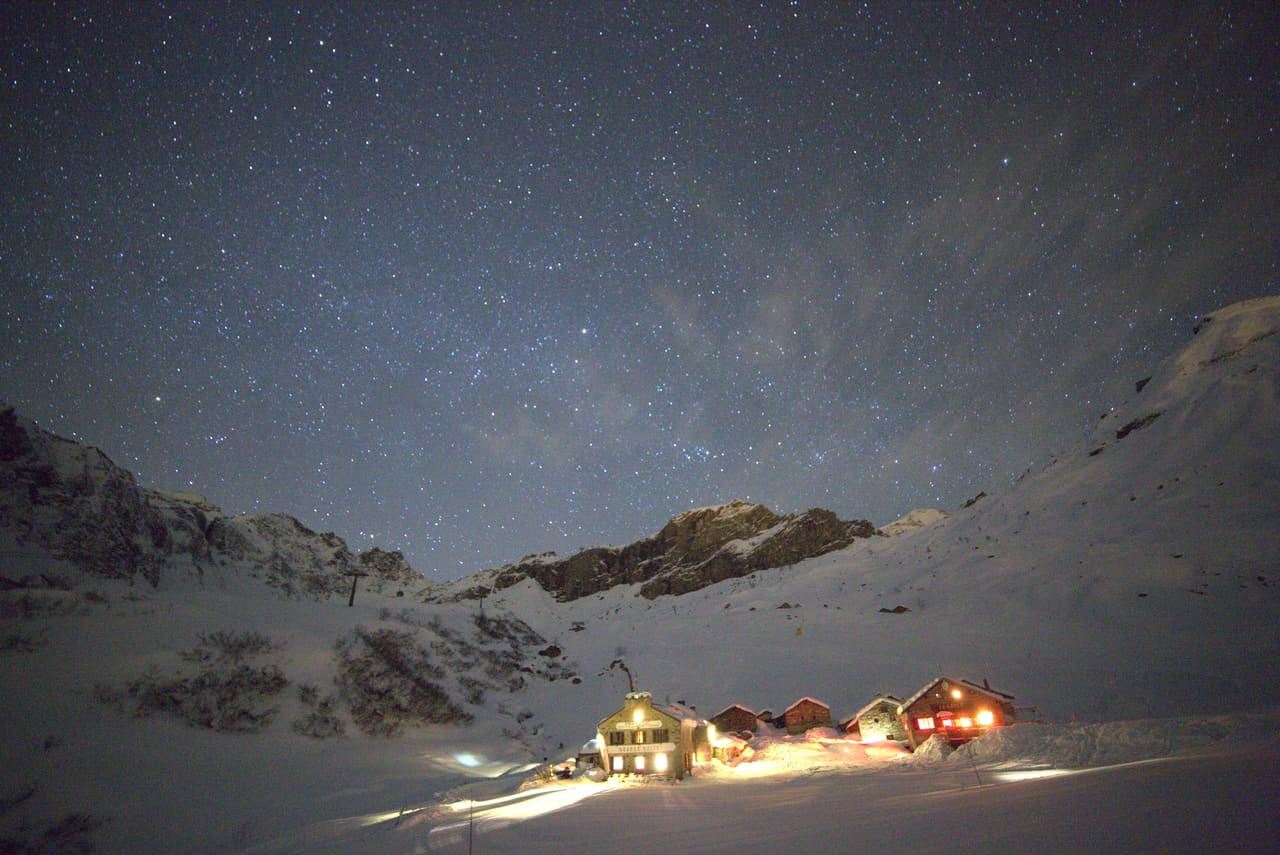
So the travellers' great stop finds itself on the slopes, a few minutes below the Pianalunga station: in winter you arrive on skis.
Today
The same roof
The hut still belongs to the Mortara section of the Italian Alpine Club. It has been carefully restored, keeping much of the period furniture: bare wood, stone walls, exposed beams and the fire lit.
In winter you come up by cable car or on skis, in summer on foot from Alagna too, about two hours on trail 205: the way of those who, more than a century ago, made their great stop here. And on clear days, as the old advertisement promised, you can see the Capanna Regina Margherita.


Make your own stop
À la carte at lunch, half board for dinner and the night. Booking is by phone.
Sources
The facts on this page come from these sources. If you have documents, photographs or memories of Grande Halte, we would love to see them.
- CAI Sezione di Mortara, «Il CAI Mortara dal 1946 a oggi»
- CAI Sezione di Mortara, «Il rifugio»
- Alagna Valsesia, «La storia»
- Alagna Valsesia, «The Olen Valley»
- Alagna Valsesia, «Indren lift story»
- Alagna Valsesia, «The Angelo Mosso Institute»
- Wikipedia, «Capanna Regina Margherita»
- Wikipedia, «Rifugio Guglielmina»